What will change in bird protection in 2026: new rules and international measures
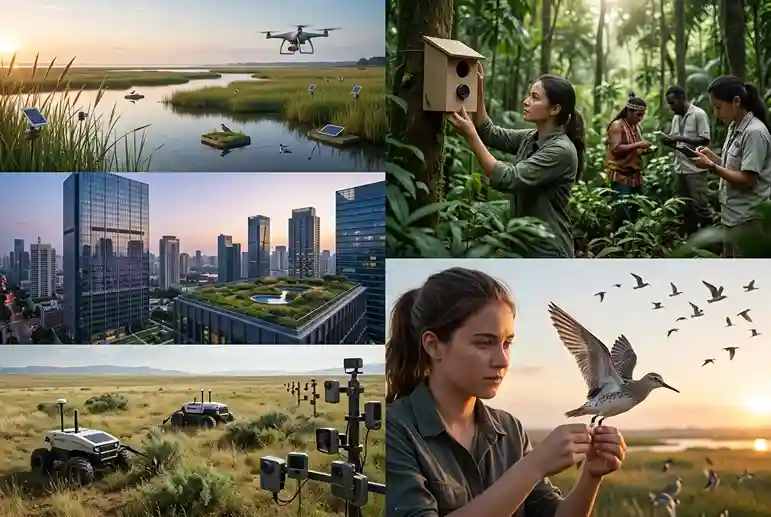
Bird protection in 2026 is moving from broad promises to more practical action. The main change is not that every country is suddenly adopting one single global law. The real shift is more complex: governments are tightening how existing laws are applied, restoration plans are becoming more detailed, migratory routes are being treated as connected systems, and disease surveillance is becoming part of conservation policy rather than a separate veterinary issue.
For ordinary readers, this means bird protection will increasingly affect land use, farming, hunting calendars, urban planning, offshore energy, fishing practices, wetlands, power lines and public reporting of sick or dead wild birds. The idea is simple: birds cannot be protected only inside reserves. Many species breed in one country, rest in another, feed at sea, cross farms and cities, and face different dangers at every stage of the journey.
Why 2026 marks a turning point
The year 2026 is important because several environmental processes reach a practical stage at the same time. In Europe, the Nature Restoration Regulation is no longer just a political headline. EU countries are expected to submit national restoration plans by September 2026, setting out how they will restore degraded ecosystems and monitor progress. These plans matter for birds because many declining species depend on wetlands, grasslands, rivers, coastal habitats, old forests and farmland mosaics rather than isolated protected sites.
The EU also published new guidance in March 2026 on the protection of wild bird species under the Birds Directive. The Birds Directive already protects naturally occurring wild birds in EU territory, but guidance can change daily practice by clarifying how rules should be applied to hunting, derogations, disturbance, licensing and development decisions.
Outside Europe, the Convention on Migratory Species has become more active in connecting bird protection across borders. At CMS COP15 in Brazil, governments advanced measures for migratory birds, including stronger attention to seabirds, raptors, shorebirds and marine flyways. That matters because many of the most threatened birds are not limited by national borders. A seabird may nest on one island, feed across several ocean zones and be killed by bycatch far from any breeding colony.
The wider mood is also changing. Bird protection is no longer framed only as saving rare species. It is becoming part of food security, climate adaptation, public health, coastal resilience and urban quality of life. Wetlands that help birds also store water and reduce flood risk. Healthy insect populations support both birds and agriculture. Safer power lines reduce raptor deaths and improve infrastructure reliability. This broader framing is likely to shape many decisions in 2026.
New rules will focus more on habitats
The most visible change in 2026 will be a stronger link between bird protection and habitat restoration. Older conservation approaches often focused on protected areas, individual species lists and bans on killing or nest destruction. Those tools still matter, but they are not enough when bird populations decline because their feeding grounds disappear, wetlands dry out, grasslands are converted, coastlines are disturbed and insects become scarce.
The EU Nature Restoration Regulation is especially important here. It pushes countries to plan restoration across ecosystems rather than only react to damage after it happens. For birds, this may mean more attention to drained peatlands, river floodplains, reedbeds, coastal lagoons, old orchards, extensive grazing systems and field margins. These places are rarely dramatic in appearance, but they are often essential for breeding, migration stops and winter survival.
The practical effect will be felt through national plans. A country may choose to restore wetlands for waterbirds, improve grassland management for ground-nesting species, reconnect rivers for riparian habitats or create better ecological corridors between protected areas. The exact measures will differ, but the direction is clear: bird protection will increasingly be judged by whether habitats are actually recovering, not just by whether a law exists on paper.
This also makes monitoring more important. Governments will need better data on bird numbers, breeding success, habitat quality and threats. Citizen science, local bird groups, satellite tracking, acoustic monitoring and professional surveys will all become more valuable. A restoration plan without reliable monitoring can look good in a document but fail in the field.
Migratory routes will receive stronger international protection
Migration is one of the hardest challenges in bird conservation. A country can protect a nesting site well, but the same bird may still die during migration because of illegal killing, power line collisions, loss of wetlands, light pollution, poisoning, hunting pressure or fishing bycatch elsewhere. That is why 2026 is seeing more attention to flyways: the long routes that birds use across continents and oceans.
CMS COP15 gave extra weight to this approach. The discussion around marine flyways is especially important because seabirds are among the most threatened bird groups. Many spend most of their lives far from land, crossing waters controlled by different countries or operating under different fisheries regimes. Protecting only breeding colonies leaves a large part of their lives exposed.
The same logic applies to raptors and shorebirds. Raptors may face electrocution, poisoning and illegal killing along migration routes. Shorebirds depend on coastal mudflats and wetlands where they can feed and rest. If one major stopover site is lost, birds may not have enough energy to complete their journey.
A useful way to understand the 2026 direction is to compare the older and newer conservation logic.
| Area of change | Older approach | Direction in 2026 |
|---|---|---|
| Habitat policy | Protect selected sites and react to damage. | Restore wider ecosystems and measure recovery. |
| Migratory birds | Focus mainly on national breeding or wintering areas. | Coordinate protection across entire flyways. |
| Seabirds | Protect colonies and some marine areas. | Address ocean routes, bycatch and marine food systems. |
| Disease response | Treat outbreaks mainly as animal health events. | Connect wildlife surveillance, conservation and public health. |
| Urban protection | Add bird-friendly actions as optional local projects. | Include cities, buildings, lighting and public spaces in planning. |
| Data and reporting | Depend heavily on expert surveys. | Combine expert monitoring, technology and citizen observations. |
This shift does not mean older tools are disappearing. Species protection, protected areas, hunting controls and enforcement remain essential. The difference is that 2026 measures are pushing these tools into a more connected system. A bird’s life cycle is being treated as one chain, and a weak link anywhere along that chain can undermine protection everywhere else.
Disease surveillance will become part of conservation
Highly pathogenic avian influenza has changed how governments and conservationists think about wild birds. The disease is not only a poultry problem and not only a public health concern. It has become a serious wildlife issue, especially for seabirds, waterbirds and some raptors.
European agencies reported 2,108 detections of highly pathogenic avian influenza A(H5) in wild birds across 32 European countries between late November 2025 and late February 2026. The same report noted detections in domestic birds and some mammals, showing why wildlife health is now linked to wider One Health planning.
This does not mean wild birds should be blamed or persecuted. That would be both unfair and ineffective. The better response is stronger surveillance, faster reporting, careful handling of dead birds, better biosecurity around poultry, and protection of vulnerable colonies from unnecessary disturbance. When birds are stressed by habitat loss, food shortage or human pressure, populations become less resilient to disease shocks.
In 2026, more conservation programmes are likely to include disease risk as a normal part of planning. For example, managers of seabird islands may need protocols for carcass reporting, visitor access, cleaning equipment and monitoring breeding colonies. Wetland managers may need to coordinate with veterinary authorities. Bird rescue groups may need clearer safety guidance and better support during outbreaks.
The public also has a role. People should not handle sick or dead wild birds without official guidance. Reporting unusual mortality can help authorities detect outbreaks earlier. This is especially important during migration seasons, when birds gather in large numbers and viruses can move quickly across regions.
Cities and communities will have a bigger role
Bird protection in 2026 is not only about remote wetlands, forests and islands. Cities are becoming part of the conservation map. Urban areas can be dangerous for birds because of glass collisions, artificial lighting, loss of nesting spaces, pollution, cats, poorly timed vegetation cutting and a lack of insect-rich green areas. At the same time, cities can become important refuges when they are planned well.
World Migratory Bird Day continues to promote public involvement, with 2026 messages stressing cross-border cooperation, local action and shared responsibility for migratory birds. The campaign highlights a useful point: global migration depends on many small local decisions.
For towns, schools, businesses and homeowners, bird protection can become practical rather than abstract. Many actions are simple, affordable and visible.
• Reduce night lighting during peak migration periods.
• Use bird-safe glass or external window markings on risky buildings.
• Plant native trees, shrubs and flowers that support insects and provide shelter.
• Avoid cutting hedges and trees during nesting periods.
• Keep cats indoors or supervised during sensitive breeding seasons.
• Report sick or dead birds through official channels instead of touching them.
• Support local wetland, riverbank and park restoration projects.
These measures may look small when taken separately, but they become powerful when repeated across neighbourhoods and cities. Urban conservation also helps people understand birds as living neighbours rather than distant wildlife. That emotional connection often matters because public support influences budgets, planning rules and enforcement.
Farming, energy and fisheries will face closer scrutiny
Many bird declines are linked to the way land and sea are used. That is why 2026 protection measures will increasingly touch sectors that are not traditionally seen as conservation sectors.
In agriculture, the pressure will be on maintaining habitats within productive landscapes. Farmland birds need nesting cover, insects, seed food, hedgerows, fallow strips, wet patches and less disturbance during breeding. Restoration plans may encourage more nature-friendly management, but the political challenge is to make these measures realistic for farmers. Bird protection works best when it is designed with land managers rather than imposed as a distant rule.
Energy infrastructure will also remain a major issue. Wind farms, power lines and solar developments can all be compatible with bird protection when planned carefully, but poor siting can cause serious harm. Raptors and large migratory birds are especially vulnerable to collision and electrocution. In 2026, stronger data on migration routes and sensitive areas should influence where projects are approved, where mitigation is required and where development should be avoided.
At sea, fisheries are central to seabird protection. Bycatch remains one of the most serious threats to albatrosses, petrels, shearwaters and other marine birds. Technical solutions exist, including bird-scaring lines, weighted hooks, night setting and changes in fishing practice. The challenge is consistent use, monitoring and enforcement across fleets and jurisdictions. Marine flyway work under CMS can help because seabirds need protection across ocean basins, not only within national waters.
The more honest conservation discussion in 2026 is not about stopping all human activity. It is about making high-risk activity safer, moving damaging activity away from sensitive places, and recognising that some areas are simply too important for breeding, feeding or migration to be treated as ordinary development zones.
What success should look like by the end of 2026
The success of 2026 will not be measured by one dramatic announcement. It will be measured by whether new plans become real action. A strong bird protection year would include credible restoration plans, clearer enforcement of existing bird laws, better international coordination for migratory species, stronger disease surveillance and practical changes in cities, farms, fisheries and energy planning.
The best outcomes will be those that connect policy with field reality. A national restoration plan should lead to wetter wetlands, better grasslands and safer nesting areas. A flyway agreement should lead to protected stopover sites, lower bycatch and safer migration routes. A disease protocol should lead to earlier detection and fewer unnecessary risks for both wildlife workers and the public.
There is also a cultural change underway. Birds are being recognised as indicators of wider environmental health. When swifts disappear from a town, when farmland birds fall silent, when seabird colonies fail or when wetlands lose their seasonal visitors, the problem is rarely only about birds. It often signals deeper pressure on insects, water systems, soil, climate resilience and the quality of shared landscapes.
Conclusion
Bird protection in 2026 is becoming more practical, more international and more closely tied to everyday decisions. The most important changes are not limited to new bans or symbolic declarations. They involve restoration planning, clearer legal guidance, coordinated flyway protection, disease monitoring, safer infrastructure, better urban design and stronger public involvement.
The direction is promising, but it will only matter if governments, businesses, land managers and communities treat implementation seriously. Birds need laws, but they also need functioning habitats, safe routes and people who notice when something is wrong. In 2026, protection is no longer only about saving rare species at the edge of human life. It is about learning to share landscapes, coastlines and cities with the birds that have always connected them.