Birds and extreme weather: how storms and heatwaves disrupt migration
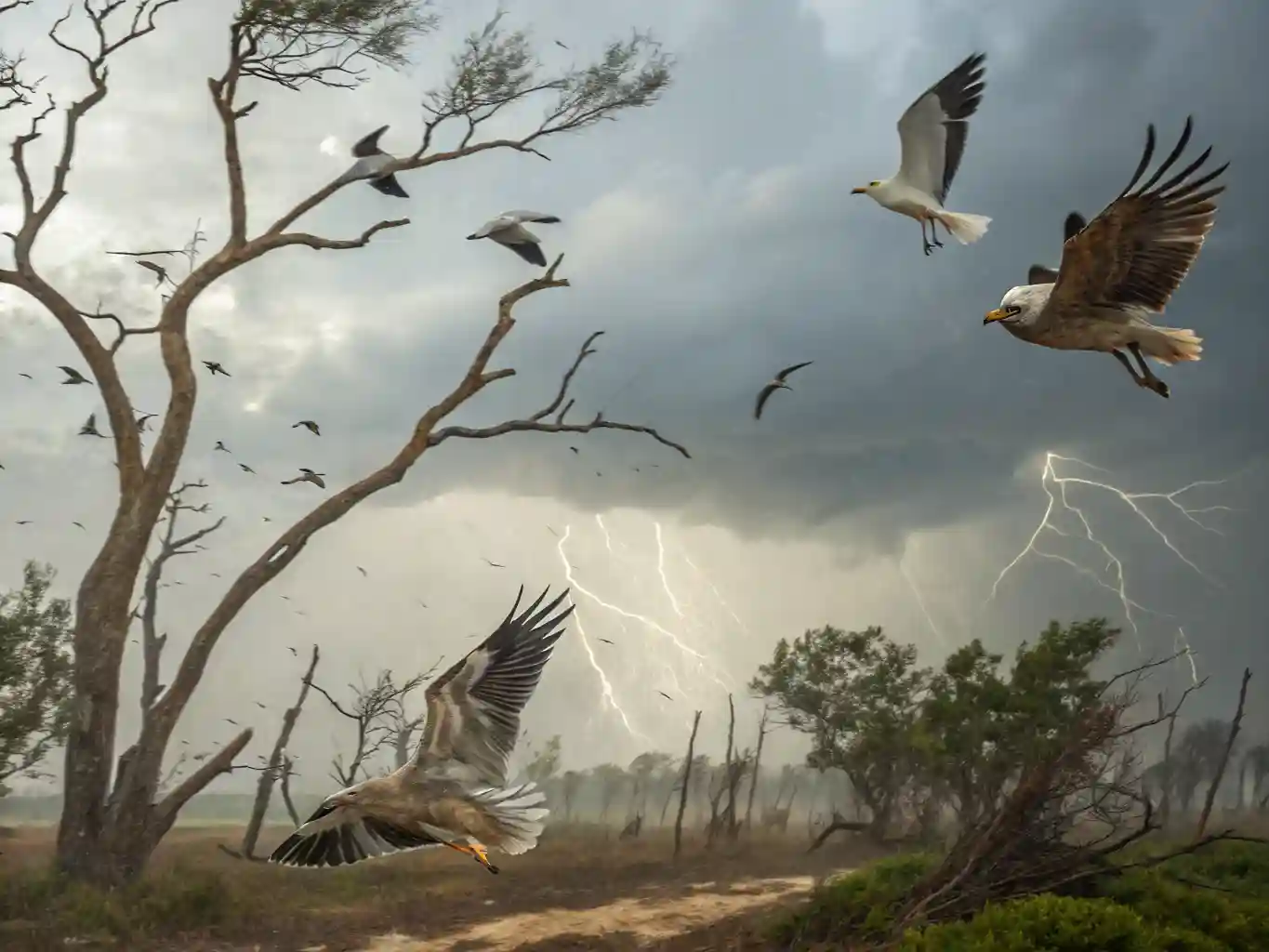
Migration is one of the most demanding journeys in the natural world. Every year, billions of birds cross continents, oceans, deserts, mountain chains, and crowded urban landscapes with astonishing precision. They travel because timing matters: food appears in waves, breeding grounds open for a short season, and safe wintering areas may lie thousands of miles away. A small shift in wind, temperature, rainfall, or insect abundance can change the outcome of that journey.
Extreme weather is now one of the strongest forces interrupting these ancient routes. Storms can push birds far from their flyways, destroy resting sites, and turn a manageable sea crossing into a lethal trap. Heatwaves can dry wetlands, reduce insects, weaken birds before departure, and make stopover sites unsafe. Migration has always involved risk, but the growing intensity and frequency of weather extremes are changing the rules faster than many species can adjust.
Why migration depends on weather
Bird migration is not a simple movement from one point to another. It is a chain of decisions made across days, weeks, or months. A bird must know when to leave, how high to fly, where to rest, when to feed heavily, and when to wait. Weather shapes every one of these choices.
Favorable winds can save energy and shorten dangerous crossings. Clear nights help many songbirds navigate by stars and landscape cues. Moderate temperatures reduce water loss and keep insects active, giving migrants the food they need during stopovers. Rain can be useful when it refreshes wetlands or brings insects to the surface, but heavy rain can ground birds for days. Strong headwinds may delay departure. Sudden cold can shut down food supplies. Extreme heat can turn a resting site into a place where birds lose more energy than they gain.
Many migratory birds depend on a finely tuned seasonal rhythm. They leave wintering grounds when internal clocks, day length, body condition, and local weather all point in the same direction. Some species can adjust quickly when conditions change. Others follow inherited routes and schedules that evolved over thousands of years. That difference matters because modern weather extremes often appear abruptly and unevenly. A bird may begin migration under normal conditions, then meet a heat dome, a tropical storm, or a long drought hundreds of miles later.
Stopover sites are especially important. These are the places where birds rebuild fat stores, drink, rest, and recover from long flights. A shorebird may arrive at a coastal mudflat after flying through the night and need to feed almost immediately. A warbler crossing a city may depend on a patch of trees with insects. A goose may require wetlands with open water and safe roosting space. When extreme weather damages those places, the whole migration route becomes weaker.
Weather also affects what scientists call phenology, the timing of seasonal events. Birds often need to arrive when food peaks. If spring warmth makes caterpillars emerge earlier than usual, but birds arrive on their old schedule, chicks may hatch after the richest feeding period has passed. If drought reduces seeds or insects along a route, birds may continue moving in poor condition. A migration route is not only a line on a map; it is a moving calendar of wind, food, water, and safety.
How storms push birds off course
Storms can disrupt migration in dramatic ways. A bird flying with a helpful tailwind may suddenly encounter a powerful weather system that changes direction, pressure, visibility, and altitude conditions. Strong winds can push birds sideways for hundreds or even thousands of miles. This is why unusual bird sightings often occur after hurricanes, cyclones, or major storm fronts. Seabirds may appear far inland. North American birds may be found in Europe. Small migrants may turn up on islands where they normally do not occur.
Being blown off course is not always fatal, but it can be costly. Birds have limited energy. A migrant carries fuel in the form of fat, and that fuel must last until the next feeding opportunity. If a storm forces a bird to fly longer than expected, fight headwinds, or land in poor habitat, its reserves can fall dangerously low. A displaced bird may also struggle to find suitable food. A woodland species dropped onto open coastline may have few options. A shorebird pushed inland may not find mudflats. A seabird trapped over land may face exhaustion and collision risks.
Storms also create problems before birds take off. Heavy rain can delay migration and crowd birds into stopover sites. This may sound harmless, but delay has consequences. Birds may miss favorable winds, arrive late at breeding grounds, or face increased competition for food. When many migrants are grounded together, predators may find easy opportunities. Disease can also spread more easily when birds gather densely in limited safe areas.
For coastal birds, storms can reshape the land itself. High waves and storm surges erode beaches, flood nests, alter sandbars, and cover mudflats where shorebirds feed. Saltwater pushed into freshwater wetlands can change vegetation and invertebrate communities. A single severe storm may remove a nesting colony or destroy a key resting area that birds have used for generations. Some habitats recover, but repeated storms can prevent recovery from taking hold.
Storms during migration can be especially dangerous at night. Many songbirds migrate after sunset, when the air is cooler and predators are fewer. Bad weather can reduce visibility and push birds lower, bringing them closer to buildings, towers, power lines, and other obstacles. Bright city lights make the situation worse by attracting and disorienting birds in low clouds or fog. A stormy night over a lit urban area can lead to mass collision events, especially during peak migration.
Storms do not affect every species equally. Large birds may handle strong winds better than tiny songbirds, but they still depend on safe landing places. Seabirds are built for wind, yet intense cyclones can carry them far beyond normal feeding zones. Shorebirds may use wind to travel long distances, but their coastal stopovers are vulnerable to storm surge. The real danger comes when storms strike at the wrong time, in the wrong place, or again and again before birds can recover.
How heatwaves drain energy and change routes
Heatwaves are quieter than storms, but they can be just as disruptive. A storm is visible and immediate; a heatwave can spread across a migration route for days or weeks, weakening birds before the most dangerous part of their journey begins. Heat changes the balance between energy, water, and food. Birds may spend more time cooling themselves and less time feeding. In extreme heat, they may pant, seek shade, reduce movement, or become active only at cooler times. These behaviors help them survive, but they also reduce the time available to build fuel.
Small birds are particularly vulnerable because they have high metabolic demands. During migration, they may need to double their body mass in fat before crossing a desert, sea, or mountain range. If a heatwave suppresses insect activity or dries out vegetation, food becomes harder to find. Birds may leave stopover sites underweight, delay departure, or attempt shorter movements. Any of these choices can reduce breeding success or survival.
Wetland birds face another problem: water loss from the landscape. Heatwaves often combine with drought, lowering water levels in marshes, lakes, rice fields, and coastal lagoons. Mudflats can dry and harden. Shallow pools can disappear. Aquatic insects and small invertebrates may decline. For cranes, ducks, herons, sandpipers, and many other migrants, these changes remove the feeding conditions they rely on.
Heat can also change migration altitude and timing. Some birds may fly higher to find cooler air, but higher flight can require more energy and may expose birds to stronger winds. Others may shift more movement into the night. Night migration already helps many species avoid heat, but if daytime temperatures remain extreme, birds still face harsh conditions when they land and need to feed. A bird cannot migrate continuously; the quality of the resting period matters as much as the flight itself.
The effects of heatwaves often appear through food webs. A hot spring may cause plants to bloom early, insects to emerge early, and caterpillars to peak before migratory birds arrive. A hot, dry summer may reduce berries and seeds that fuel autumn migration. In the Arctic, warming can alter the timing of snowmelt and insect hatches, affecting geese, shorebirds, and songbirds that breed there. When the food calendar shifts faster than birds can shift their arrival, chicks may grow more slowly or survival may drop.
Some species show flexibility. They leave earlier, take different routes, use new stopover sites, or change the length of individual flights. Yet flexibility has limits. A bird cannot use a wetland that has dried out. It cannot feed on insects that are no longer there. It cannot safely cross a desert if heat and headwinds make the journey too costly. Extreme heat does not only make migration uncomfortable; it can remove the biological support system that makes migration possible.
The pressures created by storms and heatwaves overlap in several important ways. Their effects may look different in the field, but both can break the connection between a bird’s body condition, route choice, and seasonal timing.
| Weather extreme | Main disruption | Birds most exposed | Likely result |
|---|---|---|---|
| Severe storms | Strong winds, heavy rain, poor visibility, storm surge | Seabirds, shorebirds, nocturnal songbirds, coastal nesters | Displacement, exhaustion, delayed migration, collision risk, habitat loss |
| Hurricanes and cyclones | Long-distance drift, coastal flooding, altered pressure systems | Oceanic birds, island migrants, coastal species | Birds appear far outside normal range, stopovers are damaged, nesting colonies may fail |
| Heatwaves | High temperature, water stress, reduced feeding time | Small songbirds, desert migrants, wetland birds | Lower fat reserves, delayed departure, shorter flights, higher mortality risk |
| Drought linked to heat | Dry wetlands, fewer insects, less plant growth | Waterfowl, cranes, shorebirds, insect-eating migrants | Poor stopover quality, crowding at remaining water, weaker birds at arrival |
| Warm springs | Earlier plant growth and insect peaks | Long-distance migrants that follow fixed schedules | Arrival after peak food, reduced chick survival, breeding mismatch |
The table shows why extreme weather cannot be treated as a single problem. A storm may harm birds suddenly by pushing them away from their route, while a heatwave may weaken them gradually by making food and water scarce. The outcome is often similar: birds reach the next stage of migration with less energy, less time, and fewer safe choices.
Stopover sites under pressure
Migration routes are often described as flyways, but a better image is a chain. Each link is a place where birds can rest and refuel. If one link weakens, the entire journey becomes harder. Extreme weather is now testing many of those links at once.
Coastal wetlands are among the most valuable stopover habitats. They provide mudflats rich in worms, shellfish, and small crustaceans. They also offer open views that help birds detect predators. But these areas sit directly in the path of storm surge, sea-level rise, erosion, and heat-driven changes in salinity. When storms wash over coastal marshes, they can temporarily increase water levels beyond the reach of feeding shorebirds. When heat and drought reduce freshwater flow, salt levels may rise and change the small animals that birds eat.
Inland wetlands are just as important. Many ducks, geese, cranes, rails, and waders rely on shallow freshwater systems during migration. These habitats can disappear quickly during prolonged heat. A marsh that looks full in spring may be cracked and dry by late summer. Birds arriving from long flights may find little water and little food. They may crowd into remaining wetlands, which raises competition and can increase the risk of disease.
Forests and shrublands also serve as stopover sites, especially for songbirds. A patch of trees in farmland or a city park may look small to people, but to a migrating warbler it can be the difference between recovery and collapse. Heatwaves can reduce insect availability in these habitats. Storms can strip leaves, break branches, and alter the structure birds use for shelter. After severe weather, a forest may still stand, but its value as a feeding site may be temporarily reduced.
Agricultural landscapes add another layer of uncertainty. Some birds use rice fields, pastures, orchards, and grain stubble as migration habitat. These places can help replace lost natural wetlands or grasslands, but they depend on human water use and farming schedules. During drought or heatwaves, irrigation may be reduced. During storms, fields may flood at the wrong time or be treated quickly after damage. Birds that depend on working landscapes are therefore affected by both weather and human response to weather.
Urban stopovers are becoming more important because many migration routes now pass through heavily built regions. City parks, river corridors, cemeteries, gardens, and green roofs can all support tired birds. Yet extreme weather makes urban hazards worse. Heat islands keep cities warmer at night. Storms push birds lower into zones filled with glass and artificial light. After a hot day, insects may be less available, and birds may spend more time avoiding heat than feeding.
Healthy stopover sites share several traits that make them valuable during unstable weather:
• They offer food across a wide range of dates, not only during a short seasonal peak.
• They include water, shade, and shelter so birds can recover during heat or after storms.
• They are connected to other habitats, giving birds options when one site fails.
• They have limited disturbance from people, pets, vehicles, and bright night lighting.
• They can absorb flooding, drought, and wind damage without losing all ecological function.
These qualities matter because extreme weather rarely arrives with perfect timing. A strong migration network needs backup sites, varied habitats, and safe places spread across the route. Conservation cannot rely only on a few famous reserves, even when those reserves are excellent. Birds need choices because weather is becoming less predictable.
When timing falls apart
The deepest disruption caused by extreme weather may not be a single storm or a single hot week. It is the loss of reliable timing. Migration depends on synchronization between departure, travel, arrival, food, breeding, and recovery. When weather extremes shift different parts of that schedule in different directions, birds face difficult trade-offs.
A long-distance migrant may winter in the tropics and breed in northern forests. It may begin migration based on day length, which remains stable from year to year. But the spring conditions waiting far to the north may now change earlier or more erratically than before. If warm weather brings insects out early, the bird may arrive after the best food has passed. If a late storm then hits the breeding grounds, nests may fail or adults may need extra energy to survive cold rain.
Short-distance migrants may have more ability to respond to local weather because they are closer to the conditions ahead. Some can shift arrival dates quickly. Yet they are not immune. A heatwave can push them to leave early, only for a later cold snap to reduce food. A storm can delay them long enough that nesting territories are already occupied. A drought can make familiar stopover sites unusable.
For young birds, disrupted timing is especially dangerous. Juveniles often migrate for the first time without having learned the route from parents. They rely on inherited direction, instinctive behavior, and environmental cues. Extreme weather can scatter these inexperienced birds, force them into poor habitat, or make their first stopovers unreliable. Population effects may appear later, when fewer young birds return to breed.
There is also a hidden cost in repeated disruption. A bird may survive one difficult migration but arrive in poor condition. It may lay fewer eggs, feed chicks less efficiently, or be less able to escape predators. If extreme weather affects both spring and autumn migration, birds have fewer chances to rebuild. The annual cycle becomes a series of linked pressures: a hard winter, a hot stopover, a stormy crossing, a late arrival, a dry breeding season, then another risky journey south.
Scientists are increasingly interested in carryover effects, where trouble in one season reduces success in the next. A bird that fails to gain enough fat during autumn migration may be weaker on wintering grounds. A bird that struggles through drought in winter may start spring migration late. A storm that damages a coastal stopover in one year may affect survival for several seasons if habitat recovery is slow. Extreme weather is not only a temporary interruption; it can echo through the full life cycle.
Some changes are already visible to birdwatchers and researchers. Arrival dates are shifting for many species. Unusual sightings after storms are becoming more widely reported. Heat and drought are concentrating waterbirds into fewer wetlands. Breeding success can rise or fall sharply depending on whether food peaks match nesting dates. The details vary by region and species, but the larger pattern is clear: weather extremes are making migration less predictable and more physically demanding.
What can help migrating birds
Birds cannot be protected from every storm or heatwave, but the landscapes they depend on can be made more resilient. The most effective approach is not to manage migration as a narrow corridor. It is to protect a living network of habitats that gives birds room to adjust.
Wetland protection is central. Marshes, floodplains, estuaries, ponds, and seasonal pools store water, support insects and aquatic life, and provide safe resting places. Restoring natural water flow can help wetlands survive drought and recover after storms. In some places, managed wetlands can be timed to provide shallow water during migration peaks. This is especially important where natural wetlands have been drained or fragmented.
Coastal conservation also needs space for movement. As seas rise and storms intensify, beaches and marshes need room to shift inland. Hard barriers such as seawalls may protect buildings but can squeeze coastal habitats until they disappear. Protecting undeveloped land behind marshes, restoring dunes, and limiting disturbance on beaches can give shorebirds and seabirds better chances during both migration and nesting.
Urban areas can reduce hazards with practical changes. Turning off unnecessary lights during migration nights helps prevent disorientation. Bird-safe glass can reduce collisions. Native trees, shrubs, and pollinator-friendly plantings increase food availability. Even small green spaces can matter when they form a connected pattern across a city. During heatwaves, shaded vegetation and clean water sources can make urban stopovers safer.
Farmers and land managers also have a role. Flooded fields, hedgerows, grass margins, delayed mowing, and reduced pesticide pressure can all support migrants when planned carefully. Not every farm can become bird habitat, but many working landscapes can provide seasonal help. The best results often come when conservation groups, farmers, water managers, and local communities coordinate around migration periods.
Public observation is valuable as well. Birdwatchers, coastal residents, farmers, and city communities often notice unusual arrivals, mass movements, or birds in distress before formal surveys capture the pattern. Citizen science data can help researchers understand how birds respond to storms, heatwaves, and shifting seasons. Good reporting can also guide temporary action, such as reducing lights during major migration nights or protecting a beach after storm-driven bird displacement.
The most useful actions are often simple, but they need to happen across wide areas:
• Keep cats indoors or supervised, especially during migration peaks.
• Reduce unnecessary outdoor lighting during spring and autumn migration.
• Plant native vegetation that supports insects, berries, seeds, and shelter.
• Avoid disturbing flocks at beaches, mudflats, wetlands, and lakeshores.
• Support wetland, grassland, forest, and coastal habitat protection.
• Provide clean, shallow water in gardens during hot periods when it can be maintained safely.
These steps do not solve the climate problem by themselves, but they reduce avoidable stress. A bird exhausted by heat or displaced by a storm has little margin for extra danger. Removing hazards near homes, farms, parks, and coastlines can turn local spaces into real support for migration.
Conclusion
Migration has always been a test of endurance, timing, and adaptation. Birds have crossed stormy seas, dry deserts, and cold mountains for thousands of years. What is changing now is the speed and intensity of the challenges they face. Stronger storms can scatter migrants and damage the places where they rest. Heatwaves can drain energy, dry wetlands, and break the connection between arrival and food. When these pressures combine, migration becomes less like a seasonal rhythm and more like a series of emergencies.
Yet the story is not only one of loss. Birds are remarkably resilient when they still have habitat, food, water, and safe passage. A restored wetland, a darker city skyline, a protected beach, a native garden, or a connected river corridor can all help. The more options birds have along their routes, the better they can survive unstable weather.
Extreme weather is changing migration, but human choices still shape the outcome. Protecting the places birds depend on is no longer only about preserving beauty or abundance. It is about keeping the great seasonal movement of life possible in a world where the weather is harder to read.