
Birds that are old residents of the Red Data Book
The Red Data Book lists many bird species that are threatened with extinction due to habitat loss, poaching and climate change. Some of them have been on its pages for decades — true "old residents" of the Red List whose fate still hangs in the balance in 2026.
Below are five Red Book veterans with descriptions, habitats and the main causes of their decline. All of them need global conservation efforts: protection of breeding grounds, strict regulation of hunting and a reduction in pollution.
Siberian Crane (Grus leucogeranus)
A large bird reaching 140 cm in height with a wingspan of up to 230 cm. Its plumage is all white except for the black flight feathers, which are visible only in flight. The Siberian Crane breeds in the swampy lowlands of northern Siberia and winters in India and China.
The main causes of extinction are the destruction of wetland habitats, poaching along migration routes and climate change affecting the Arctic marshes where the species nests.
Swinhoe's Snipe (Gallinago megala)
A medium-sized wading bird with brown plumage, characteristic stripes on the head and a long straight bill. It nests in the wetlands of Alaska and eastern Siberia and migrates to Southeast Asia for the winter.
The principal threats are habitat loss and degradation caused by agriculture and urbanisation across both its breeding and wintering grounds.
Black Stork (Ciconia nigra)
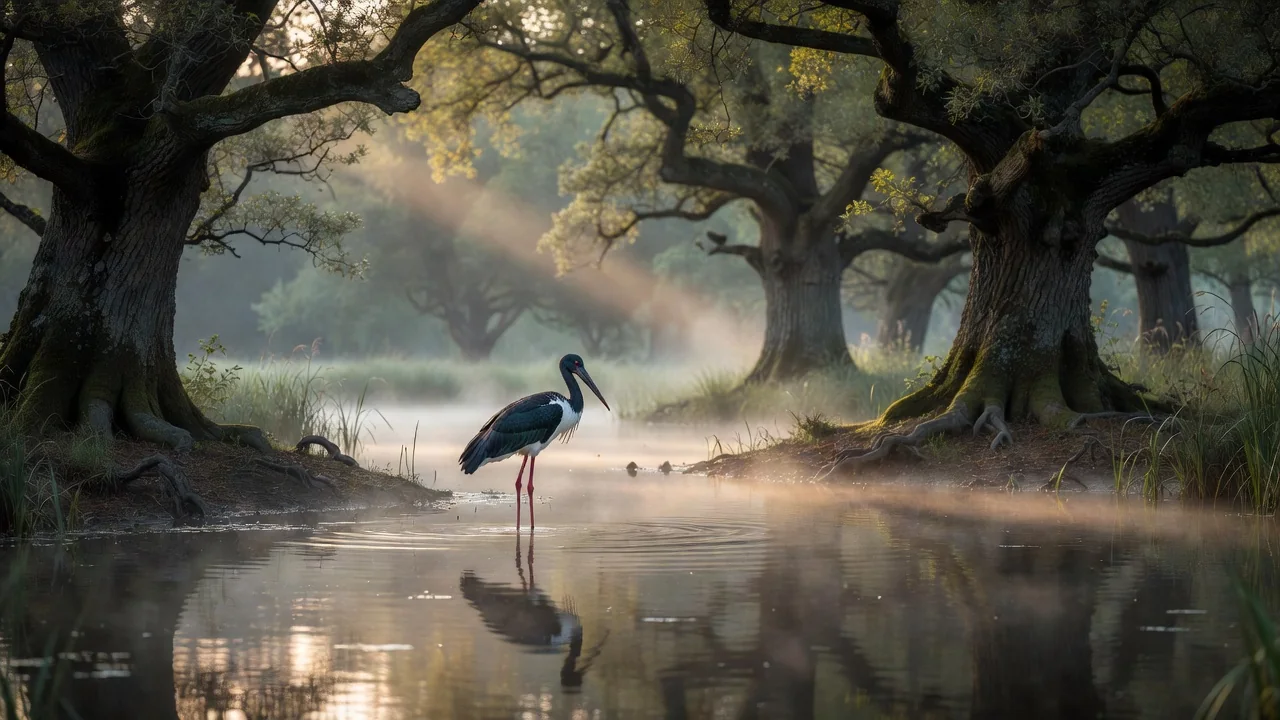
A large, secretive bird with black plumage on the back, a white belly and long red legs and bill. It inhabits forested and swampy areas of Europe, Asia and parts of Africa, nesting in old trees and on rocks.
Deforestation, pollution of water bodies and human disturbance near nests are the main reasons for its continuing decline.
Osprey (Pandion haliaetus)
A medium-sized bird of prey with dark upperparts, a white underside, long angled wings and a hooked bill. The Osprey is found worldwide near fresh and salt water bodies where fish are abundant.
Water pollution by pesticides, destruction of nesting sites and illegal capture remain the key threats to this cosmopolitan raptor.
Yellow-billed Loon (Gavia adamsii)
A large waterbird with striking black-and-white breeding plumage, a long body and a pale, upturned bill. It nests in the Arctic regions of North America and Eurasia and winters along the northern coasts of the Atlantic and Pacific Oceans.
Oil pollution at sea, climate-driven changes in ice conditions and disturbance by people are the greatest dangers for the species.
Red Book veterans at a glance
| Species | Scientific name | Habitat | Main threat |
|---|---|---|---|
| Siberian Crane | Grus leucogeranus | North Siberian wetlands | Habitat loss, poaching |
| Swinhoe's Snipe | Gallinago megala | Wetlands of Siberia and Alaska | Agriculture, urbanisation |
| Black Stork | Ciconia nigra | Forests and swamps of Eurasia | Deforestation, disturbance |
| Osprey | Pandion haliaetus | Water bodies worldwide | Pesticides, illegal capture |
| Yellow-billed Loon | Gavia adamsii | Arctic coasts and tundra | Oil pollution, climate change |
How to help the Red Book's old residents
- Support protected areas that cover key breeding and wintering wetlands.
- Back anti-poaching patrols along major migration flyways.
- Reduce pesticide and oil pollution of rivers, lakes and seas.
- Fund monitoring programmes that track populations year by year.
These species are important components of their ecosystems, and their conservation requires global efforts — protecting habitats, regulating hunting and poaching, and reducing the impacts of climate change and pollution.